Bringing you the reliable news from around the world and from the worldwide web.

Friday, September 5, 2014

Talking to other using minds are now possible today!

Washington (AFP) - For the first time, scientists have been able to send a simple mental message from one person to another without any contact between the two, thousands of miles apart in India and France. Research led by experts at Harvard University shows technology can be used to transmit information from one person's brain to another's even, as in this case, if they are thousands of miles away. "It is kind of technological realization of the dream of telepathy, but it is definitely not magical," Giulio Ruffini, a theoretical physicist and co-author of the research, told AFP by phone from Barcelona. "We are using technology to interact electromagnetically with the brain." For the experiment, one person wearing a wireless, Internet-linked electroencephalogram or EEG would think a simple greeting, like "hola," or "ciao." A computer translated the words into digital binary code, presented by a series of 1s or 0s. Then, this message was emailed from India to France, and delivered via robot to the receiver, who through non-invasive brain stimulation could see flashes of light in their peripheral vision. The subjects receiving the message did not hear or see the words themselves, but were correctly able to report the flashes of light that corresponded to the message. "We wanted to find out if one could communicate directly between two people by reading out the brain activity from one person and injecting brain activity into the second person, and do so across great physical distances by leveraging existing communication pathways," said co-author Alvaro Pascual-Leone, professor of neurology at Harvard Medical School. "One such pathway is, of course, the Internet, so our question became, 'Could we develop an experiment that would bypass the talking or typing part of Internet and establish direct brain-to-brain communication between subjects located far away from each other in India and France?'" Ruffini added that extra care was taken to make sure no sensory information got in the way that could have influenced the interpretation of the message. Researchers have been attempting to send a message from person to person this way for about a decade, and the proof of principle that was reported in the journal PLOS ONE is still rudimentary, he told AFP. "We hope that in the longer term this could radically change the way we communicate with each other," said Ruffini. http://news.yahoo.com/telepathy-experiment-sends-1st-mental-message-222701481.html

Thursday, September 4, 2014

‘I did not commit any crime,’ Enrile said!

MANILA, Philippines—“I did not commit any crime,” Senator Juan Ponce Enrile on Friday told the Sandiganbayan third division as he pleaded not guilty to 15 counts of graft and corruption. Like Enrile, Janet Lim-Napoles also pleaded not guilty while Enrile’s forme chief of staff Atty. Jessica Lucila “Gigi” Reyes refused to enter a plea. “I plead not guilty, your honors. I did not commit any crime,” Enrile told the anti-graft court third division. Enrile and Reyes were ordered to sit beside each other by Associate Justice Samuel Martires. The justice urged the two to sit down as Reyes suffers from panic attacks while Enrile is frail due to old age. The two were blocked from view from a wall of lawyers and other co-accused Enrile and Reyes engaged in small talk while they sat beside each other. At one point, Reyes brought out her towel and wiped her eyes and face as she talked with Enrile. The two were close when they worked together in the Senate. They were once rumored to be having an affair. Napoles was also ordered to sit down as she had undergone an operation a few months back. They are co-accused in the plunder and graft charges over the pork barrel scam, the alleged diversion of public funds to ghost projects for kickbacks. Enrile is in the Philippine National Police General Hospital under police custody. He is suffering from hypertension and arrhythmia. Meanwhile, both Reyes and Napoles are detained at a regular jain in the Bureau of Jail Management and Penology female dormitory in Camp Bagong Diwa. Reyes is also asking the court medical attention as she claimed to be suffering from mixed anxiety disorder Read more: http://newsinfo.inquirer.net/635538/i-did-not-commit-any-crime-enrile-said-as-he-pleads-not-guilty-on-graft#ixzz3CUQBtdEV

Sunday, March 30, 2014

NASA-backed study says human civilization is headed for irreversible collapse


According to a new NASA-backed study, unless we immediately take steps to start correcting the inequalities of our society and the unsustainable burdens we're putting on nature, current human civilization is doomed.
Post-apocalyptic visions of the future are quite popular these days, showing up in movies, TV shows, games, comics and books, but most of the serious talk of these scenarios has really only occurred in conspiracy theory and 'prepper' communities. However, a new study led by Safa Motesharrei, a mathematician at the National Socio-Environmental Synthesis Center (SESYNC), shows us that we all need to be taking this idea a little more seriously — not as some kind of survival guide, but to prevent these visions of the future from happening.
This isn't some weird study about zombie outbreaks, or even something a bit more grounded in reality, like a rebirth of the Cold War and our eventual nuclear annihilation. No, what it comes down to in the Human And Nature Dynamics (HANDY) model, that Motesharrei and his colleagues designed, is a combination of economic inequality and the depletion of natural resources.
Examining 5,000 years worth of history, the researchers looking specifically at how various human civilizations collapsed during that time period, such as the Mayans and the Roman Empire. There can be many reasons for these collapses, but looking at common factors, they produced a simple model that took into account population, how that population was divided (into workers, non-workers and/or elites) and how the population consumed the resources of nature and accumulated wealth. It also looked at how these factors could produce either a type-N collapse (where Nature disappears) or a type-L collapse (where the labour force of workers disappears).
[ More Geekquinox: Burmese pythons show amazing homing instinct ]
Running their model through several different scenarios, they found that natural resource depletion could cause a irreversible collapse regardless of any other factors, even in equitable societies where wealth was distributed equally between between workers and non-workers, or egalitarian societies with only workers. Even then, in these scenarios, avoiding a complete collapse was possible by reducing how much is consumed and by making sure resources were distributed reasonably.
However, in scenarios with increasing inequality in the population, where non-workers become true elites who accumulate most of the wealth and give the workers only a small amount to subsist on — which unfortunately mirror how our own society is developing — civilization was most vulnerable to an irreversible collapse. As the researchers report, even the most optimistic of these scenarios still results in doom:
Importantly, in the first of these unequal society scenarios, the solution appears to be on a sustainable path for quite a long time, but even using an optimal depletion rate and starting with a very small number of Elites, the Elites eventually consume too much, resulting in a famine among Commoners that eventually causes the collapse of society. It is important to note that this Type-L collapse is due to an inequality-induced famine that causes a loss of workers, rather than a collapse of Nature. Despite appearing initially to be the same as the sustainable optimal solution obtained in the absence of Elites, economic stratification changes the final result: Elites' consumption keeps growing until the society collapses.
The worst part about this is that, as the elites continue to accumulate the vast majority of the resources and wealth, the workers are the first to suffer a collapse. Buffered against this collapse by what they've already accumulated to that point, the elites can continue along "business as usual," the researchers say, completely ignorant of their impending doom. Without workers to produce more for them, their wealth is depleted until there's nothing left, and they suffer a collapse as well.
So, if we're in these latter scenarios, with their fairly grim view of the future, all due to the presence of our elites, how can we avoid a complete collapse of society that nobody, not even the 'preppers,' are going to come out of unscathed?
Well, the current elites might not like the answer, but along with better, more sustainable resource management, we have to reduce the amount of inequality we have in our society. The best-case scenarios with elites gives civilization roughly 1,000 years, whereas the worst-case ones give us maybe 350 years before our resources are gone and civilization follows over the next 150. The elites of today will be long gone by then (unless we develop some kind of nanotech rejuvenation methods), but if these projections work out, the collapse of civilization will be the legacy they leave behind ... not only for their direct descendents, but for the entire human race.


Source: https://ca.news.yahoo.com/blogs/geekquinox/nasa-backed-study-says-human-civilization-headed-irreversible-225235031.html

Friday, March 28, 2014

The Search For Malaysia Airlines flight MH370

 Thursday's search involved 11 planes and five ships in an area of the vast southern Indian Ocean where officials believe the plane ran out of fuel and crashed, killing all 239 people aboard.
They were trying to locate 122 objects captured in French satellite images on 23 March that senior Malaysian officials described as the most credible lead yet as to the jetliner's whereabouts.
Later on Thursday, Thailand said it had satellite images showing 300 floating objects floating in roughly the same area. The objects, ranging in length from two to 15 metres, were found about 125 miles from the site where the French satellite had earlier spotted more than 100 pieces of debris.
Anond Snidvongs, executive director of Thailand's space technology development agency, said the information had been passed on to Malaysia. "But we cannot – dare not – confirm they are debris from the plane," he told AFP.
Officials from the Australian Maritime Safety Authority said Thursday's search had been split into two areas totalling 78,000 sq km (30,000 square miles). The operation involves planes and ships from the US, China, Japan, South Korea, Australia and New Zealand.
Locating and retrieving at least some of the floating objects could prove crucial in the absence of any physical evidence supporting the theory that MH370 ran out of fuel hours after it turned sharply off course and disappeared from air traffic controllers' screens over the South China Sea en route from Kuala Lumpur to Beijing.
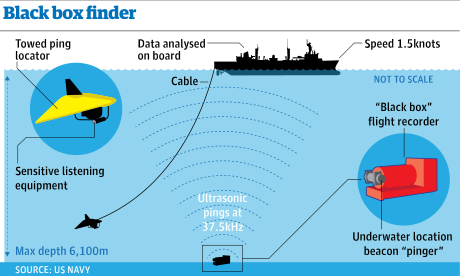
Search teams are hoping that the detection equipment will be able to pick up acoustic pings emitted every second from the plane's black box flight data recorder and cockpit voice recorder.
Each of the two recorders has a beacon, attached to the outside of the black box, which once activated by contact with water makes a sound every second.
But it is a race against time: the beacons have a battery life of 30 days, after which the pings begin to fade. Chuck Schofield of Dukane Seacom, a company that has sold the pingers to Malaysia Airlines, told Associated Press that the batteries might last an additional five days before dying.
Assuming that the plane crashed on 8 March, as Malaysian officials insist, that means the beacons aboard MH370 will begin to fade around 7 April and could go silent around 12 April.
The US navy tracking equipment – a special listening device known as a "towed pinger locator" and an underwater drone dubbed Bluefin-21 – has arrived in Perth, where the international effort is based and is being sent to the search site.
Reports said the equipment would be loaded on to the Australian navy's HMAS Ocean Shield, which will drag the locator through the water in the hope of picking up a signal.
The drone can dive to depths of about 4,500 metres, using sonar to form images of the ocean floor. Similar technology was used to locate the main wreckage from Air France flight 447 in 2011 – yet it still took searchers two years to recover the black box from the depths of the Atlantic.
The operation has been hampered by bad weather and conditions, prolonging the anguish of relatives after Malaysian officials said they had concluded that the aircraft had crashed into the sea with the loss of all on board.
Experts said search crews faced significant dangers due to frequent bad weather and the area's distance from land. "This is a really rough piece of ocean, which is going to be a terrific issue," Kerry Sieh, director of the Earth Observatory of Singapore, told Associated Press. "I worry that people carrying out the rescue mission are going to get into trouble."
Criticism of the Malaysian authorities' handling of the incident has continued, with relatives of the 154 Chinese passengers on board MH370 ridiculing Malaysian government and airline officials at a meeting in Beijing on Wednesday.
On Thursday, Malaysia Airlines ran a full-page message of condolence in the New Straits Times. "Our sincerest condolences go out to the loved ones of the 239 passengers, friends and colleagues. Words alone cannot express our enormous sorrow and pain," it said.
Chinese insurance companies have started paying compensation to the families of passengers, according to Xinhua.
Several Chinese celebrities took to social media to voice anger at the Malaysian government. In a widely shared post on Sina Weibo, China's version of Twitter, the singer and actor Chen Kun said he would boycott Malaysian goods, while the Hong Kong-born actor Deric Wan called for evidence that the plane had crashed.
"What Chinese people wanted was the truth of the missing plane instead of a pointless press conference," he said on Weibo, according to China Daily.
But in an opinion piece in Thursday's Global Times, Wang Wenwen said that while Malaysia had handled the crash aftermath ineptly, raw emotion should not be allowed to determine relations between the Chinese and Malaysian governments. "It is too early to let public opinion lead the way at the current stage. Whether Beijing-Kuala Lumpur relations will dim depends to some extent on how the [Chinese] government will act between diplomatic manoeuvering and public opinion."
The New Zealand family of Paul Weeks, one of the passengers, added their voice to criticism of the Malaysian authorities. "The whole situation has been handled appallingly, incredibly insensitively," Sara Weeks, the missing man's sister, told Radio Live in New Zealand.
"Everyone is angry about it. "The Malaysian government, the airline – it's just all been incredibly poor. Who's to say they couldn't have located the plane the day that it happened?"

7 useful tips on How to pass exams of Accountancy


Being a qualified Chartered Accountant (CA), Certified Accountant (ACCA, UK), Management Accountant (CIMA, UK) and Certified Internal Auditor (CIA, USA), I consider that passing exams require a particular skill set which is easy to learn.
One of our teachers told us: You have whole life to study but only six months to pass this paper. So, concentrate on understanding what examiner wants.
Here are 7 tips to help every student pass exams, based on my personal experience:
1.       No limiting belief please
-          Remove the limiting belief that you can’t pass.
-          If you believe you can pass or you believe you cannot pass, you are right.
-          I have seen students under the impression that examiner is their enemy. Please don’t think so. Pass percentage might be low, but students do pass their exams. So, don’t think that you will be in a failure category ever.
2.       Understand the structure of paper
-          First of all, understand the structure of paper – is there any marks allocation for a particular topic?
-          Secondly, if there is marks allocation, is examiner following it? The best thing to do is to review the past five papers.
-          What is the key topic i.e. examiner’s favorite? Is there any article by examiner in the Students’ Accountant or any other relevant student magazine? Study that topic and prepare for it, even if you don’t like it!
3.       Taking notes
-          Prepare for exams by way of ‘notes’ which you can recall quickly at the time of taking exam. This will help in two manner. First, when you write, you are in better picture of giving your mind instruction through written letters. Secondly, you can revise from your notes instead of opening the book when exam day is near. Here is my strategy for taking notes:
-          Take a paper and turn it in landscape format.
-          Put three columns in landscape form.
-          Once done, take synopsis of a chapter in smaller fonts and the language which you can easily understand.
-          Write bullet points, important concepts and key ideas which you need to remember.
-          These notes should be used at the time when paper is on head and you need to revise whole subject in two to three hours.
4.       Remembering / memorizing key ideas and formulae
-          One of the key ideas to memorize ideas e.g. formulae, is to write them in small charts and hang it in front of your bed.
-          See those formulae daily before going to bed and rising up.
-          Use different colours and markers.
-          Believe me, in my statistics paper, I was recalling the formulae in the exact colours which I wrote on charts.
5.       Exam practice
-          Practice mock exam – be your own examiner.
-          Take any past paper and solve it as a mock exam.
-          Solve past paper in the time allocated in exam. Think you are in exam hall and solve the paper accordingly.
-          Check your paper and give yourself marks.
-          See how are you performing in mock exam and be sincere to yourself.
6.       Time your paper
- Here is technique to time your paper: Take total marks and total time. Subtract 10 minutes from the total minutes. Divide the remainder with the marks and you get time per marks
- example: If there are 100 marks for a paper and you have 180 minutes. Subtract 10 minutes. This means you have 170 minutes altogether or 1.7 minutes per mark.
- make sure that you don’t spend more that 1.7 minutes per mark e.g. if a question is of 10 marks, maximum time you should spend should be 17 minutes.
- It happens that students try to focus on one particular question and if they are unable to solve it, they get confused. Don’t panic. Start next question. If student has time, he / she can take up that particular question later on.
- Try to allocate 10 minutes at the end of exam to review the paper thoroughly.
7.       Don’t annoy examiner
See for spelling errors and writing style. Writing needs to be legible and understandable. As a teacher to many students, I have noticed that spelling errors and the way students write, at times, is not understandable. Examiner has very less time to check paper. If your paper is examiner friendly, you are going to attract good marks.

Source: http://wisdomfrombooks.wordpress.com/how-to-pass-exams-7-useful-tips/

Thursday, March 27, 2014

The 2014 Forbes Billionaires List The Top 10


There are number of countries having the good economies and superior life styles, but there are also hundreds of people who are considered world’s billionaires based on their wealth. Who is the richest person in the world ever is a common question mostly arising in our minds,  so we have been making research on the top 10 richest people in the world for the last week, so be ready to have the exact answer. The ranks for the world’s top billionaires are allocated after comparing their worth.

The founder of Microsoft, Bill Gates has recaptured the title of world’s richest person with the estimated fortune of $78.5 Billion. Having the age of 58 years, tycoon’s fortune has increased by $15.8 billion during the last year. In accordance to the index, the shares of Microsoft have rose up to 40% and it is the biggest achievement for the Microsoft Company. In accordance to the Bloomberg Billionaires index, that is the daily ranking list of world’s three hundred wealthiest people around the world. Until the last year, a Mexican investor Carlos Slim was considered the richest man in the world but Bill Gates regained the top rank from him during the same year.
A latest survey exposed a list of top ten richest people on earth from which Bill Gates is the richest man in the world having the wealth of $78.5 Billion. Following is a list of Top 10 Current Billionaires around the world.

Top: 1 Bill Gates
Bill Gates is the Chairman of Microsoft. $78.5 billion are making him the richest man in the world. He is 57 years old man and he is living in the United States of America.Bill gates is not only the richest man in the world but he is also the most generous person in the world. He donated more than $28 billion just to wipe out the diseases such as polio and Malaria through the Bill & Melinda Gates Foundation and got the prayers by millions of people living around the world. That foundation is working for the welfare of people and co-chaired by his wife Melinda Gates. Bill Gates is the owner of Microsoft, which is the biggest Software Company in the world and according to Bloomberg, Bill gates owns about 398 million shares, which is the 4.8% of the firm. He is not limited to Microsoft but also has reasonable investments in the diverse sectors such as four season hotels, real estate, energy (sapphire energy) and photography corbis images through the cascade investment.

Top: 2 Carlos Slim Helu
Carlos Slim Helu is 73 years old Mexican citizen. Having the worth of $61.8 billion, he is the second richest person in the world and the richest man in the world. he is the resident of Mexico. Until the recent year, he remained the number one richest person in the world for the four years and now he is the second richest person after Bill Gates. The assets of Carlos Slim Helu are mostly invested in the publically trading companies. He has about 46% shares of his company. Until the last year, his worth was $73 billion because of the surging stocks at his financial arm, known as Grupo Financiero inbursa and at his Grupo Carso industrial and retail giant. 

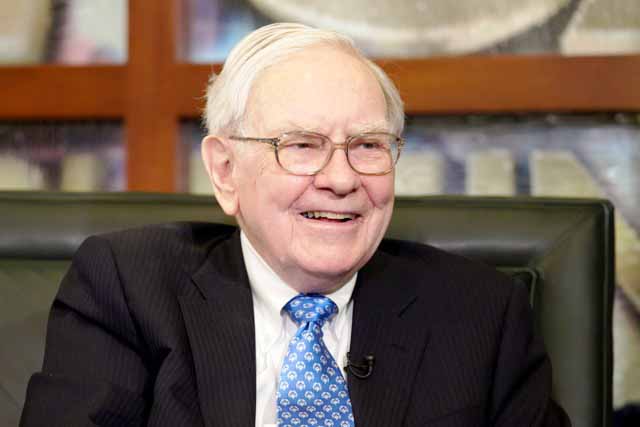
Top: 3 Warren Buffet

Warren Buffet is 82 years old citizen of United States having the worth of $57.5 billion he is the third richest person in the world. His designation is CEO, Berkshire Hathaway. The major amount of his income comes from the textile company. While Warren Buffett was struggling to survive in the market, he began buying shares in the firm in 1962. He called it the Dumbest Stock he ever purchased but the firm has been shedding the huge amounts in his pockets since the long time. One interesting thing, which I want to share with you, he purchased his first stock when he was only 11 years old and filed his initial tax return after the two years. He has a deep friendship with Bill Gates and being one of the most generous persons in the world Warren Buffett donates regularly to the Bill and Melinda Gates Foundation. 
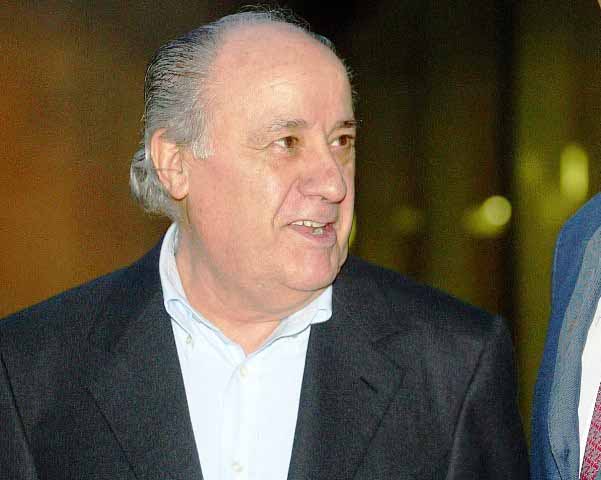
 Top: 4 Amancio Ortega

He is 77 years old fourth richest person in the world having the worth of $54.8 billion. He has a richest family background so he is richest man in Spain and his ex-wife was the wealthiest woman of the country until she died. All due to the major clothing retailer inditex, whose 59% shares does Ortega hold. He stepped down as the chairperson of inditex, parent organization of Zara in 2011.  He quit his school when he was only 13 years old just to labor in a clothing shop in March; Ortega was the world’s third richest billionaires in the list prepared by Forbes for the first time.


Top: 5 Ingvar Kamprad
He is the founder of IKEA. Having the worth of $49.1 billion, he is the fifth richest person in the world. He is 87 years old citizen of Sweden. He is the richest man in Sweden. He is featured for the first time in the list of top ten richest persons in the world. He stepped down as the chairperson to the world’s biggest furniture retailer, IKEA during the last month just to hand over his seat to his youngest son. Kamprad is expected to be the top gainer in 2012 as his organization made more than $36 billion revenue and $4 billion in net income through the diverse trusts and foundations. 
Top: 6 Charles Koch
He is the Chairman and CEO of Koch Industries.  His age is 77 years and the worth of $44.8 billion is making it the sixth richest person in the world. He is the citizen of United States of America. Charles Koch has again tied with his brother David Koch. His financial arm gains from the 42% interest in the company he is running.


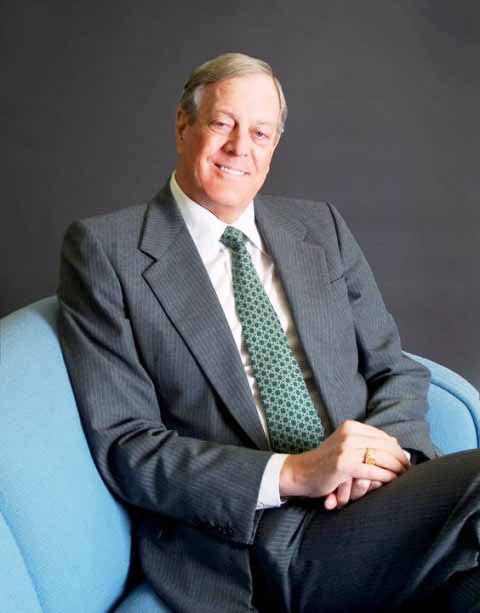
Top: 7 David Koch
He is the Executive Vice President of Koch Industries. Having the total worth of $44.8 billion, he is the seventh richest person in the world. He is more active than his brother and operating the chemical wing of Koch Industries from his home. He also owns the 42% shares of company. He is also 77 years old.   
Top: 8 Larry Ellison
He is the Founder and CEO of Oracle. His is 69 years old citizen of United States. He has the worth of $39 billion. Since March, he has dropped three spots. Before it was the fifth richest person in the world. Most of his wealth comes from the oracle where he holds 23% of stocks. 

Top: 9 Christy Walton
Christy Walton is 58 years old woman living in United States of America. She is the Co-Chair of Children’s scholarship Fund.  The worth of $35 billion is making her the ninth richest person around the world. Forbes knows her as the Wall-Mart widow. She owns almost 402 billion shares, which is nearly 12.2% of the retail company. She inherited the wealth after the death of her husband in a plane crash in 2005. 
Top: 10 Jim Walton
Jim Walton is the Chairman and CEO of Arvest Bank Group, inc. having the worth of $34.3 billion he is known the tenth richest person in the world. He has a close relation with Christy Walton because he is the brother-in-law of Christy Walton. He has approximately 12.6% shares of Wal-Mart in his possession. Jim begins his career in the company to hold the real estate transaction. He also replaced his brother John on the board after his death. John was Husband of Christy who died in a plane crash in 1995. He is also the owner of Bentonville’s local newspaper known as Benton Country Daily Record.

 Source: http://www.thecountriesof.com/who-is-the-richest-person-in-the-world-ever/